StoryLens
StoryLens connects to every tool a team runs on and turns the scattered activity into a clear report from a single prompt. I led the product design across the core surfaces.
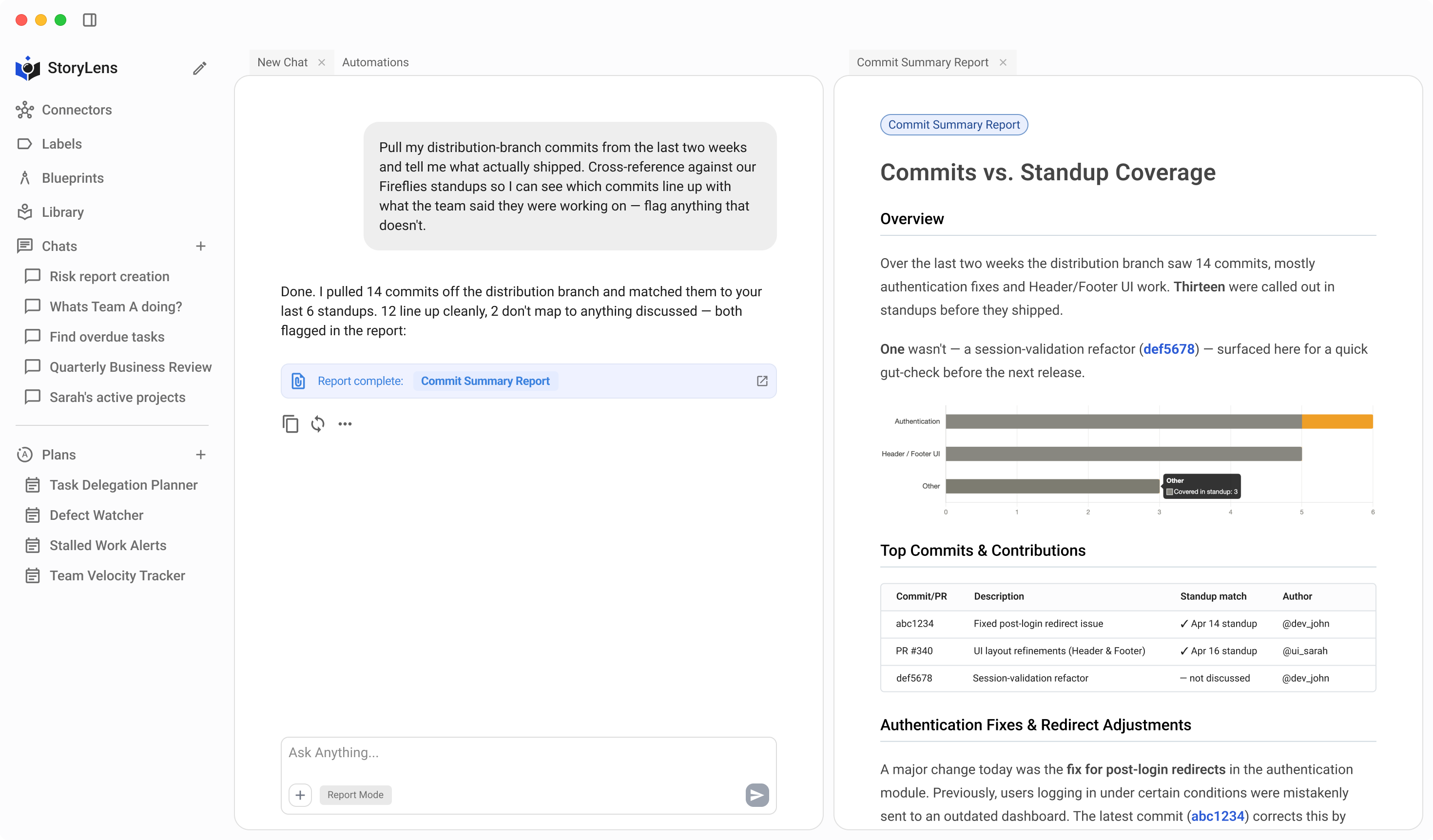
Type a question in plain language and StoryLens pulls from every connected tool and writes the answer. I designed the surface so the prompt itself is the product — connect once, then just ask.
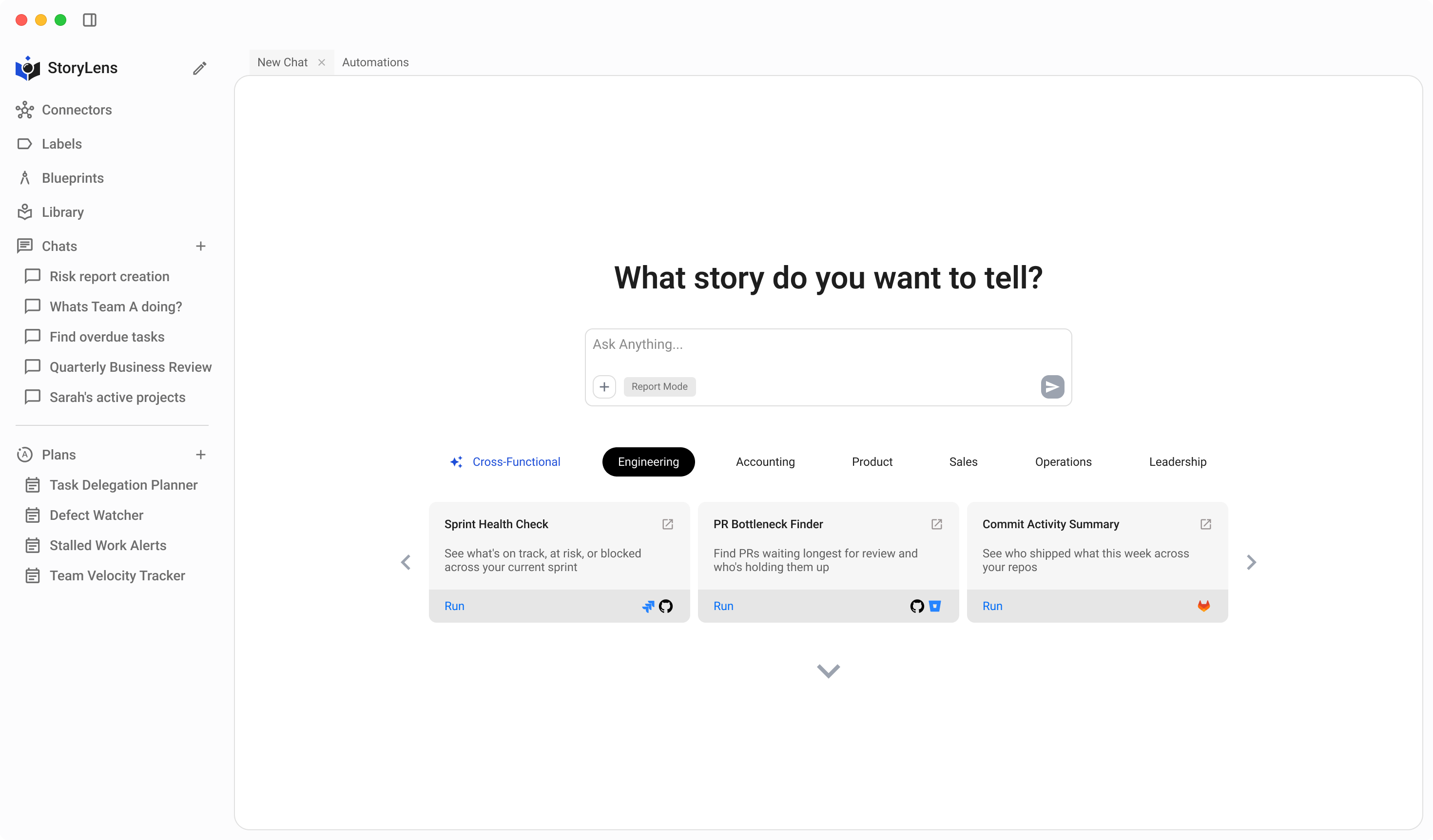
The data is already there — commits, standups, tickets, financials. Getting to it means opening three systems and stitching it by hand. Teams aren't missing information. They're missing the story.
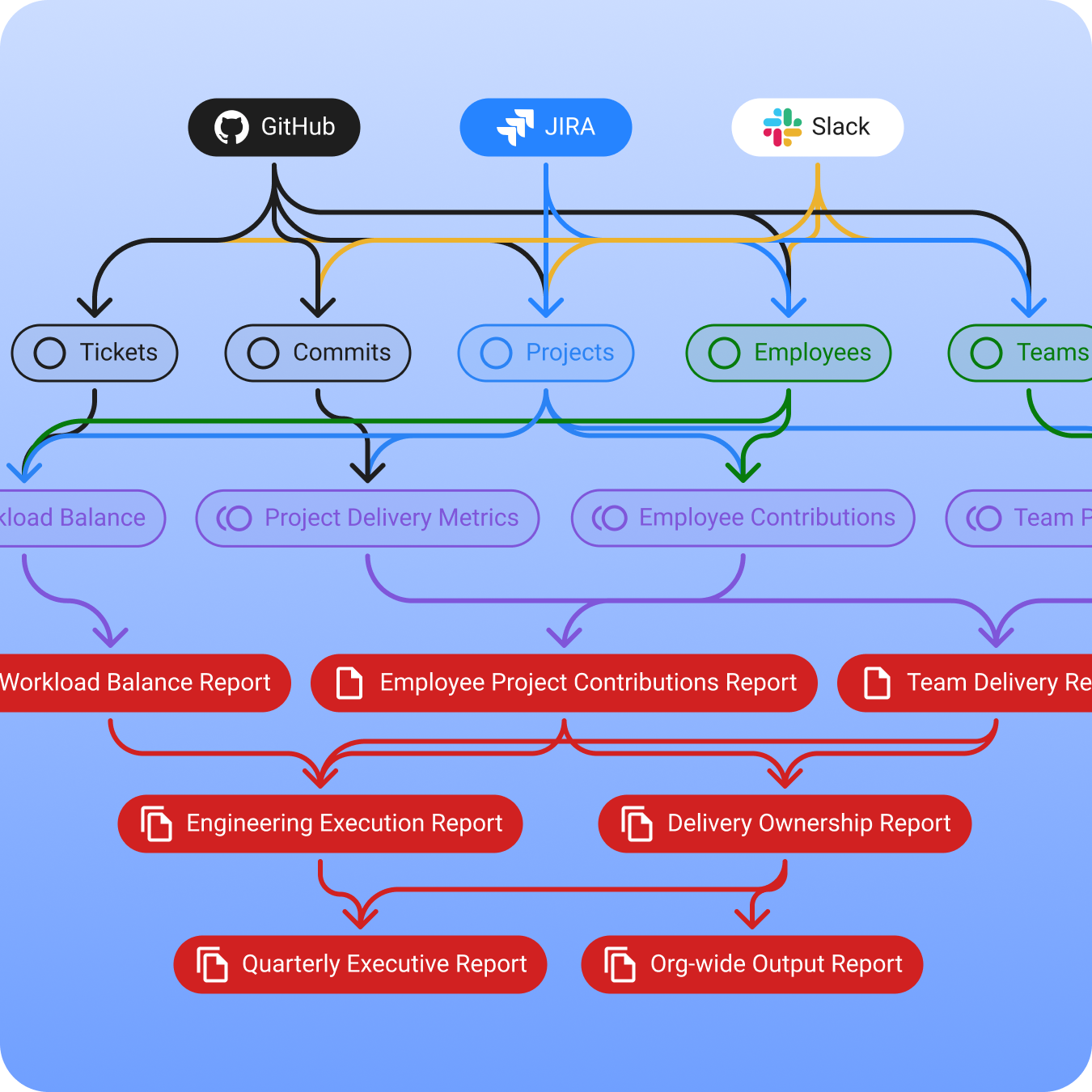
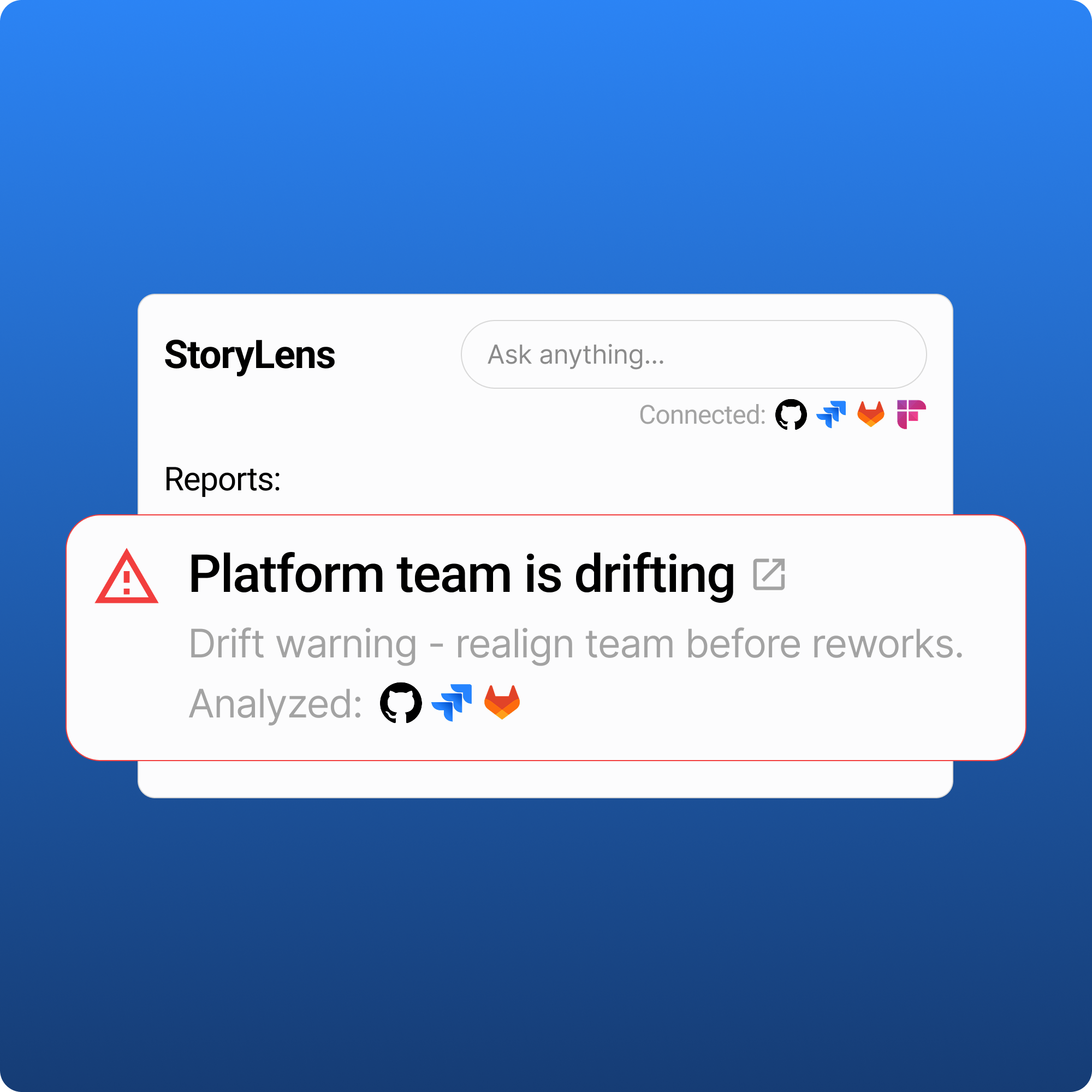
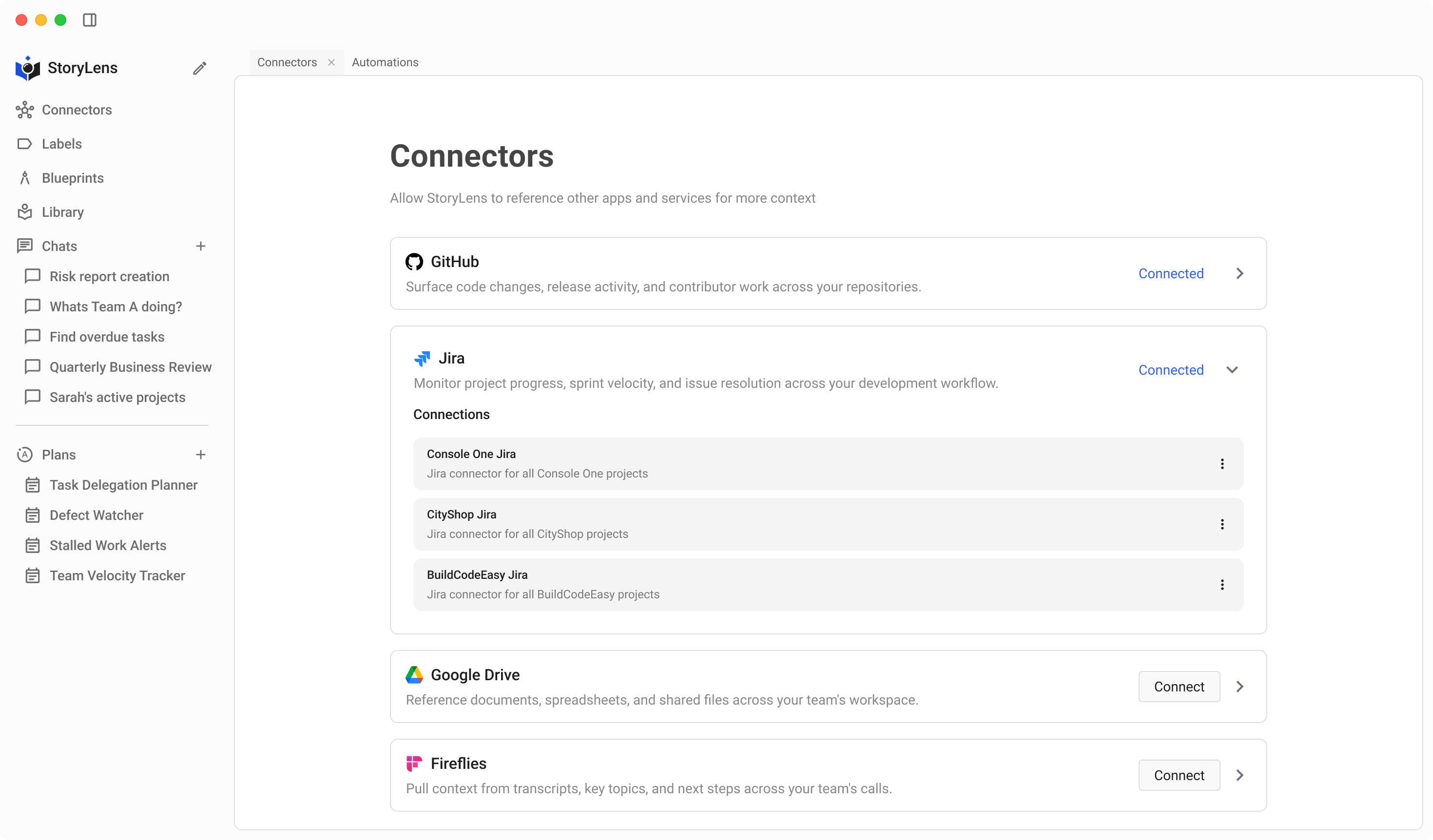
Connecting is the hardest step. The setup modal doesn't hide what's required — pick your tool, enter credentials, enable what you need. Designed for teams: one workspace, multiple accounts.
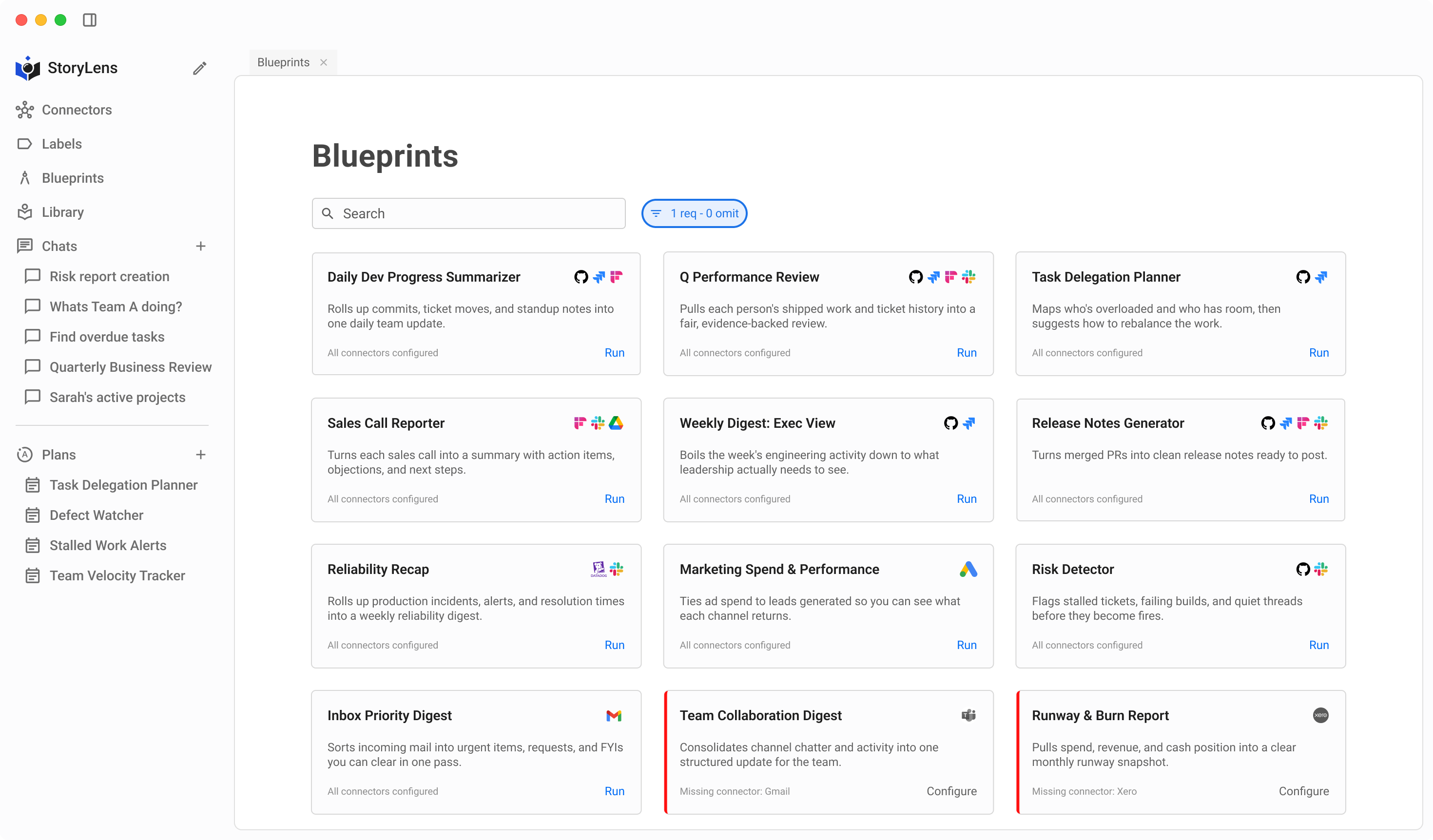
Blueprints are pre-built report templates — Q Performance Review, Risk Detector, Team Collaboration Digest. Each shows what integrations are required before you run. Making each card feel like a goal, not a setting.
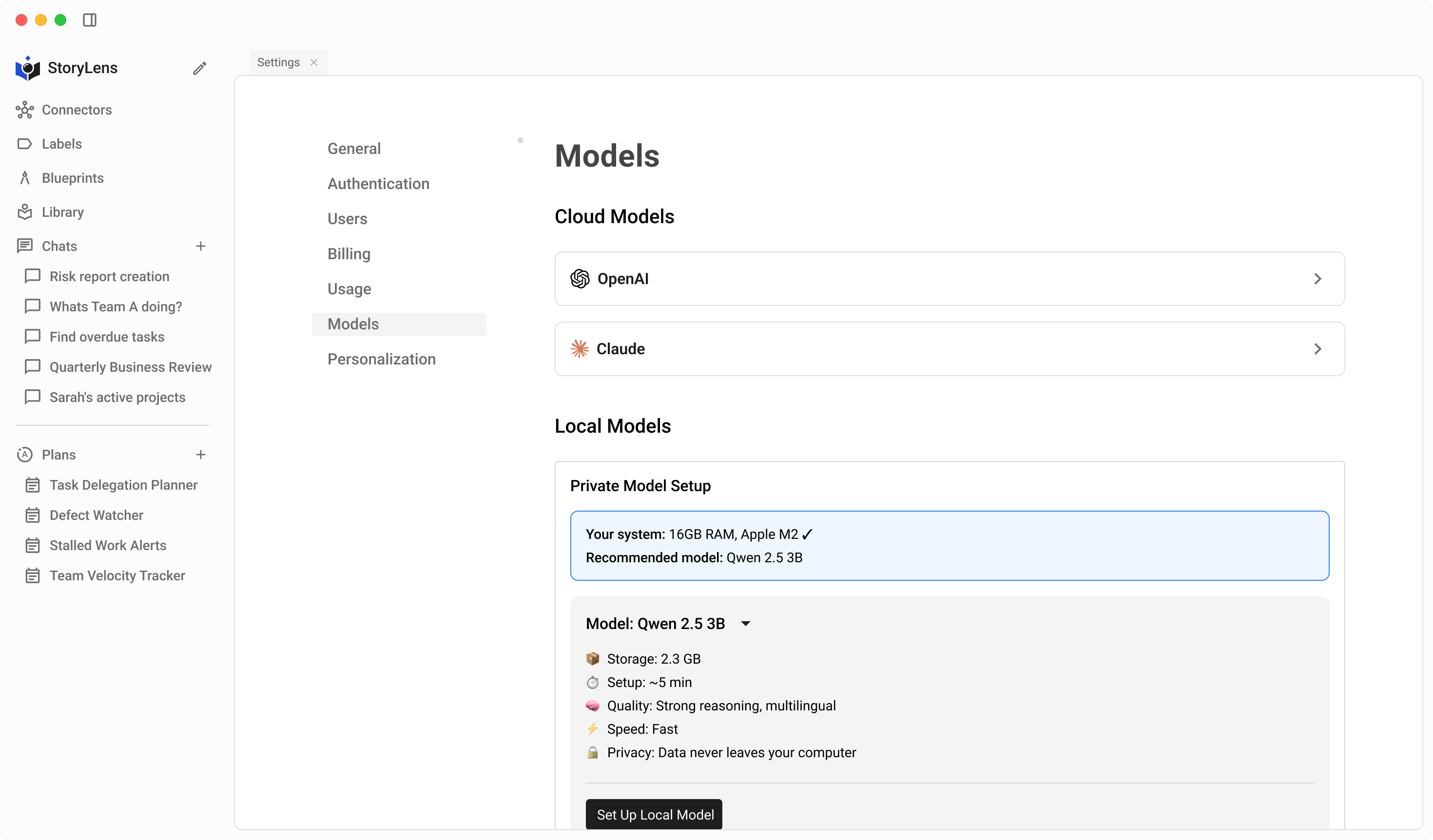
For enterprise teams, sending internal data to a third-party AI is a non-starter. On-prem and private model options were the answer — trust had to be visible in the design, not buried in the fine print.
Console One spent eighteen months on SDLC automation. The team — ex-Amazon, workforce optimization at scale — found the bottleneck wasn't writing code; it was communication and lost context. StoryLens was the answer.
'Getting a daily email summarizing my team's work would be extremely, extremely insightful.' A startup CEO, a Director at Wayfare, a dev-agency PM — three design-partner calls, three yeses.