Console One
One console for all of software development: editor, deployments, marketplace. I joined as Head of Business Development and worked across the product through three years of iteration.
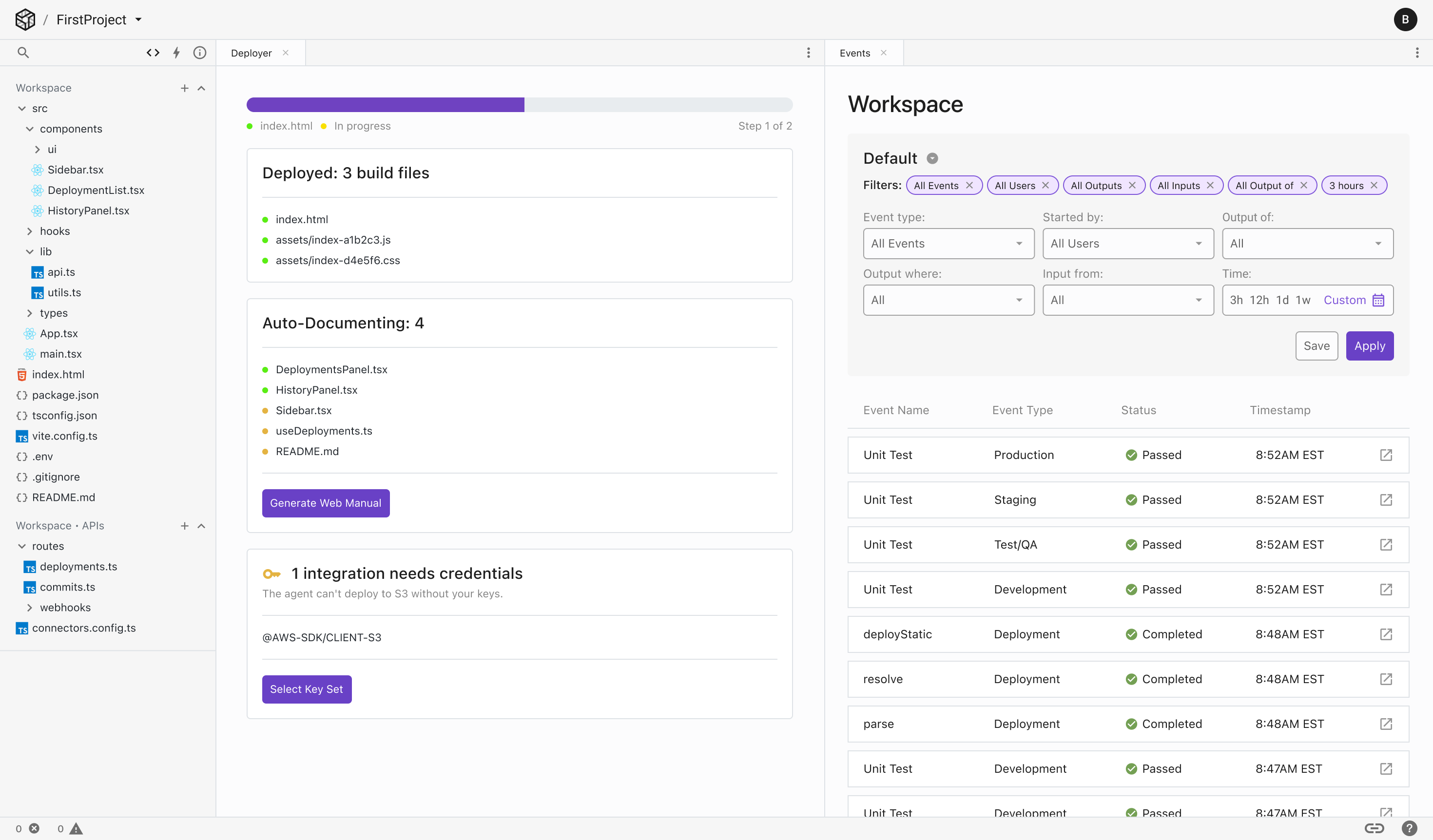
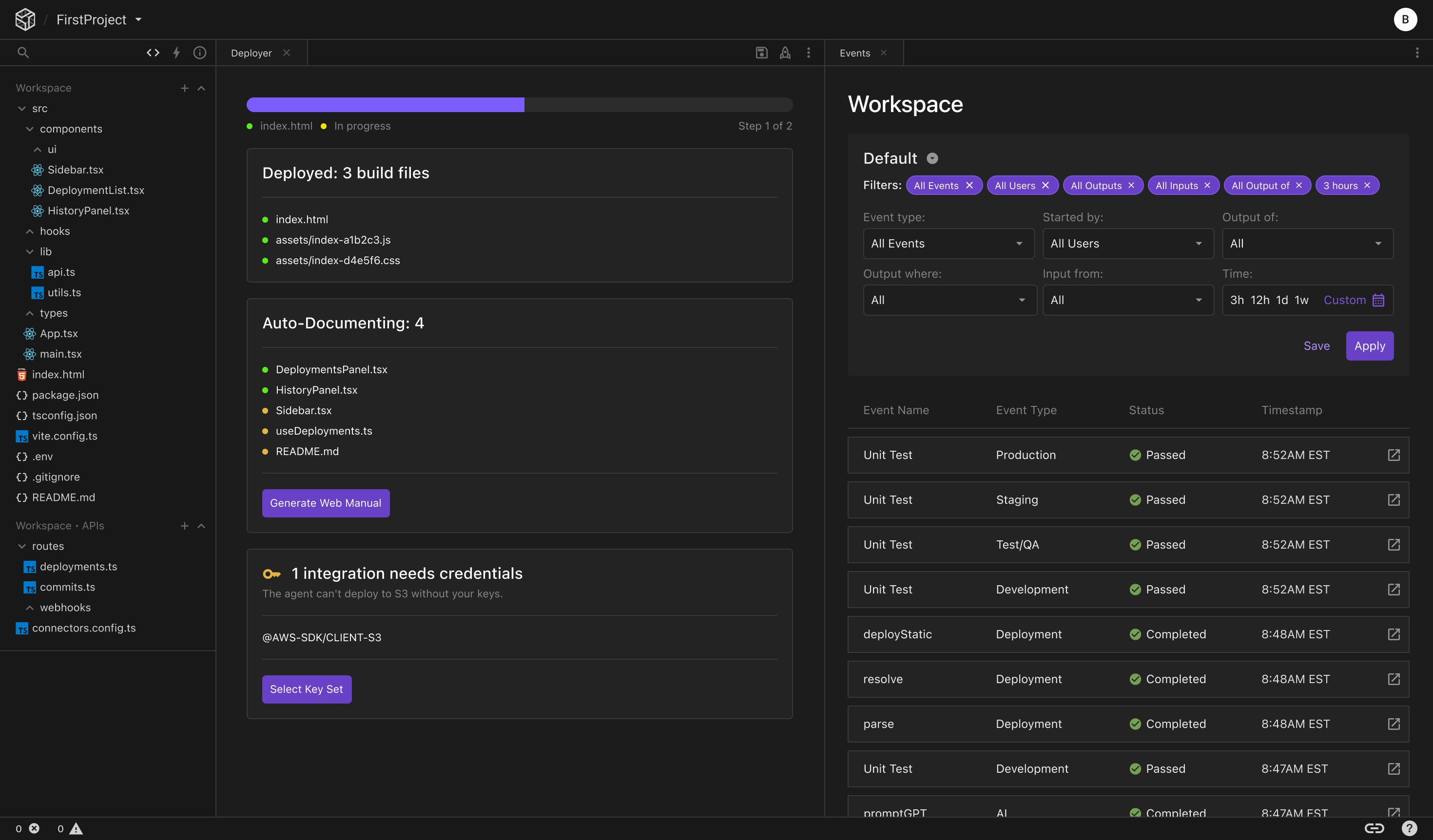
Tests running, deployments firing, docs writing themselves. The dashboard made the automation legible — and surfaced the one moment still needing a human: a credential, a decision, a blocker to clear.
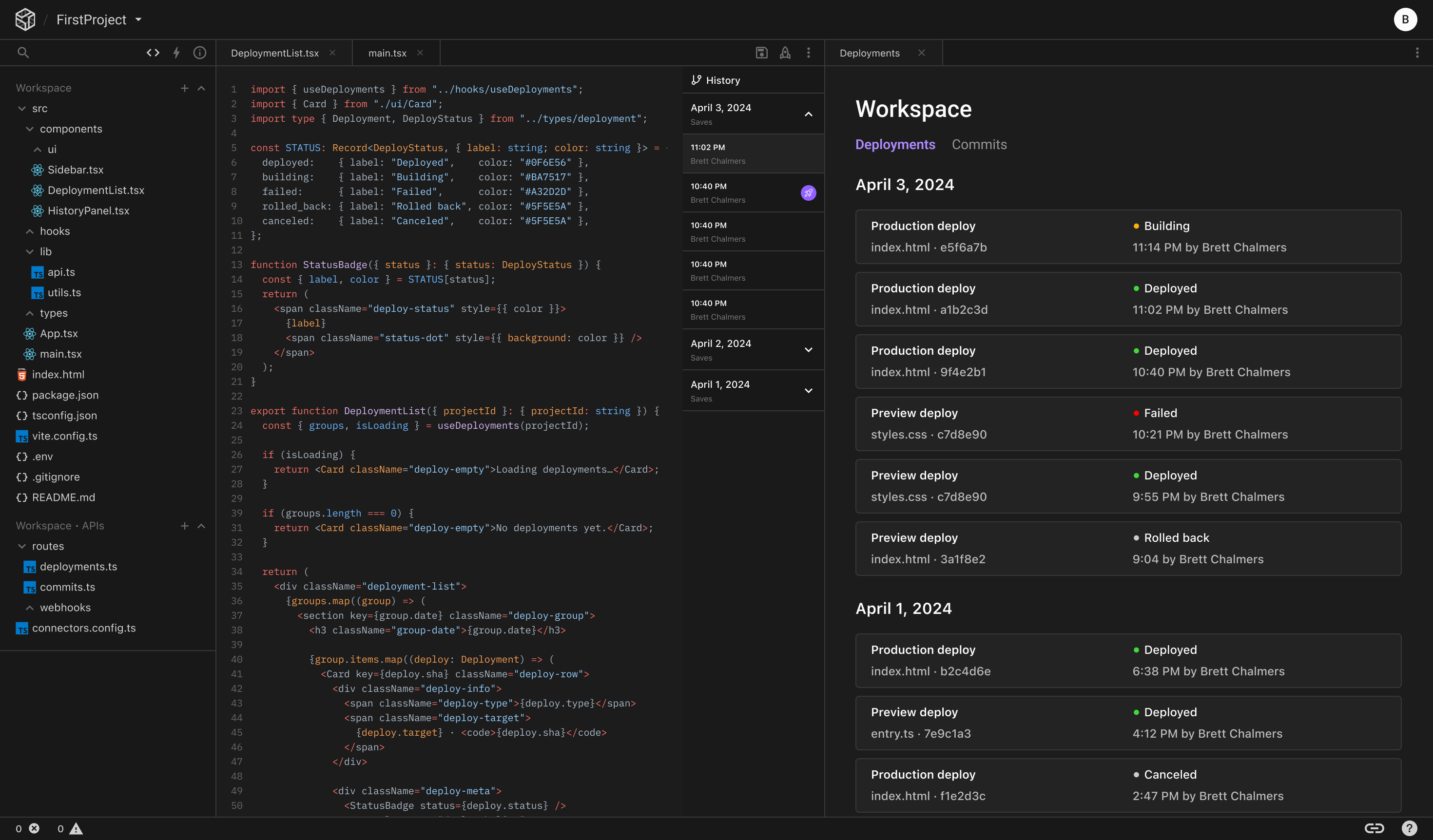
Every deploy in one timeline — production, preview, rollback — without leaving the console. No separate git workflow; the kernel tracked state continuously, so the history was always current.
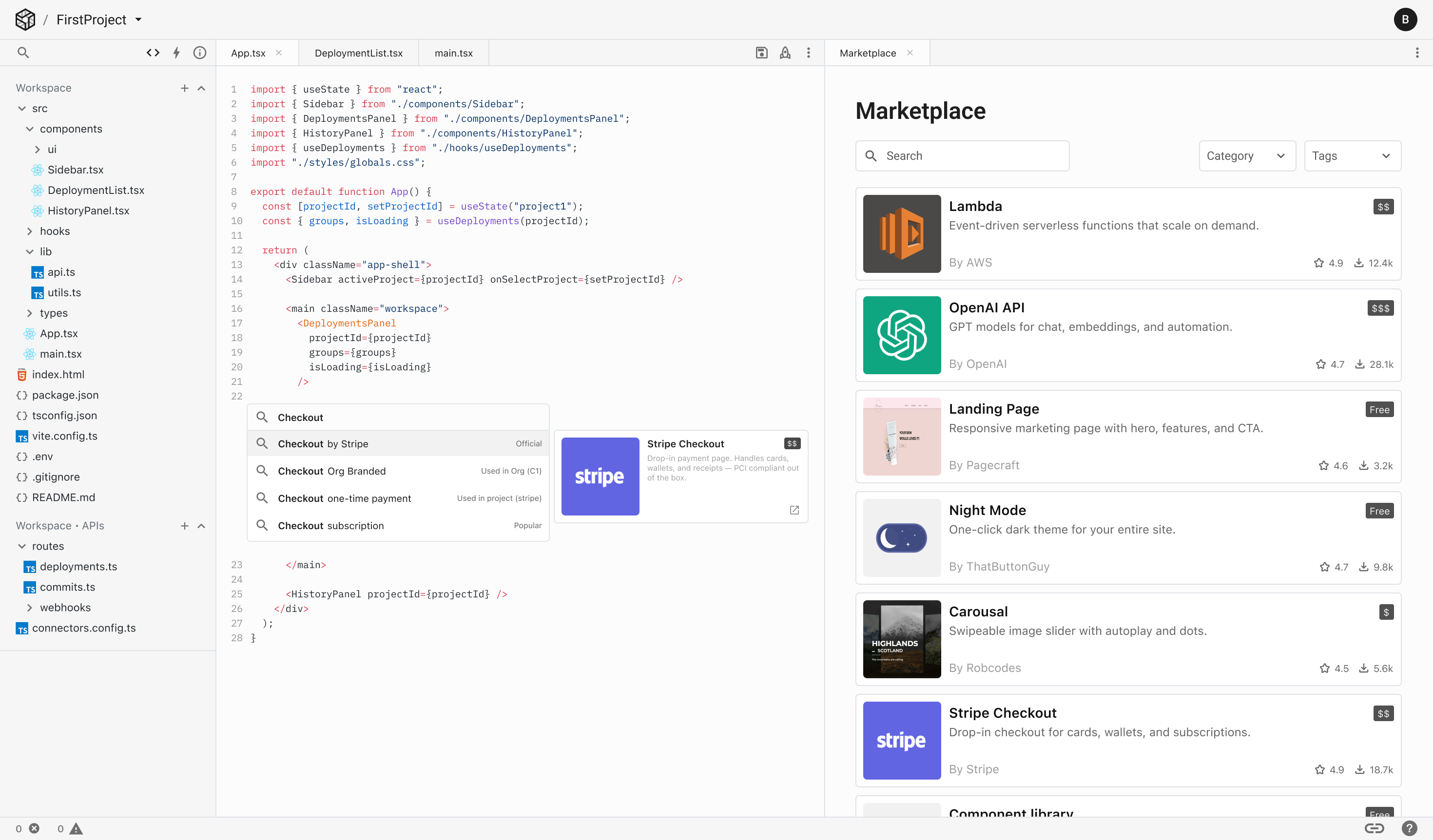
The marketplace lived inside the editor. Lambda, OpenAI API, Stripe Checkout — import in one click, and the kernel managed versioning in the background. The whole point: anyone can build on what already exists.
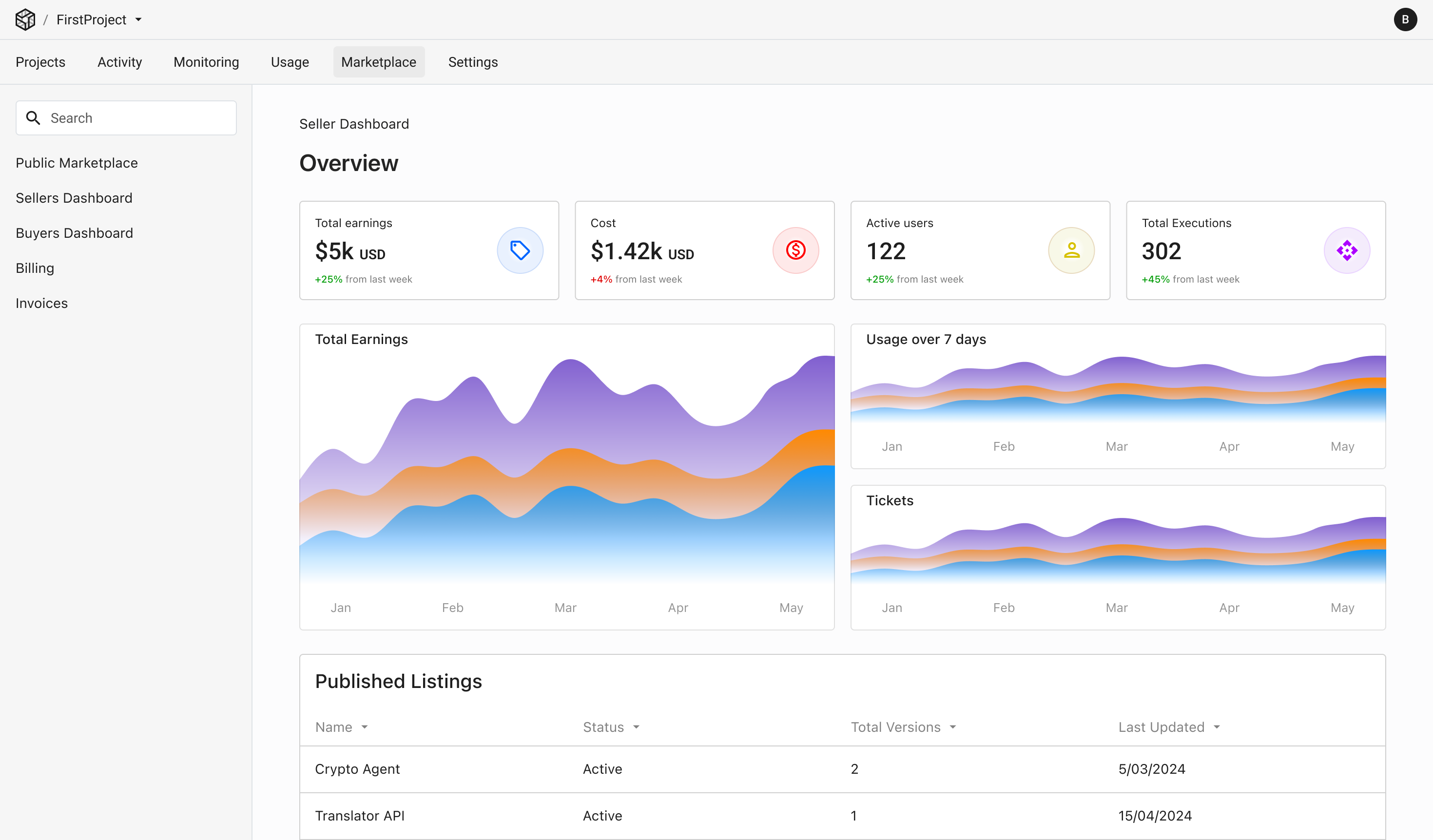
Publish a component, watch it earn. The seller dashboard tracked usage and earnings for every listing in real time — and turned building into shipping into revenue in one flow.
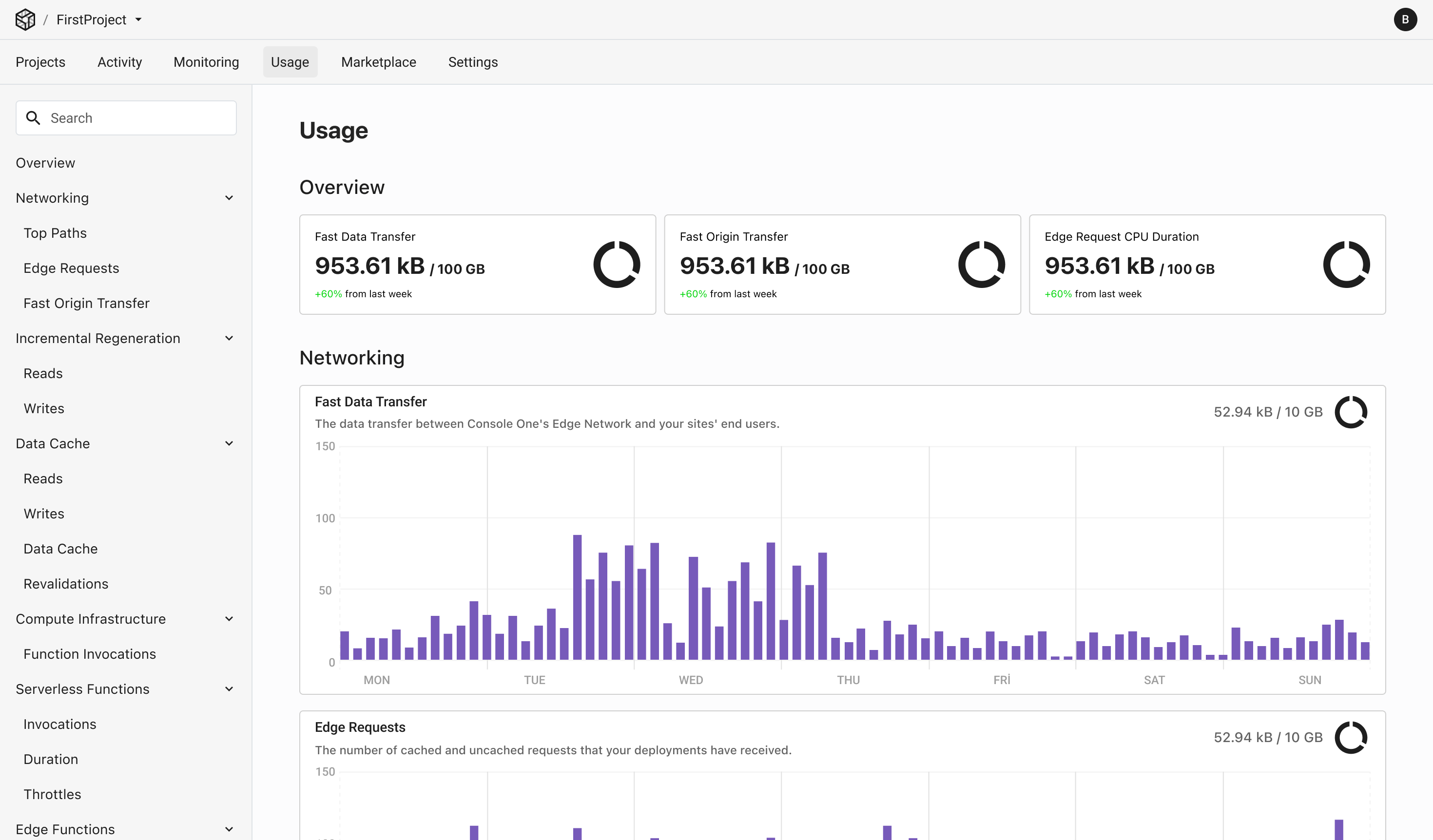
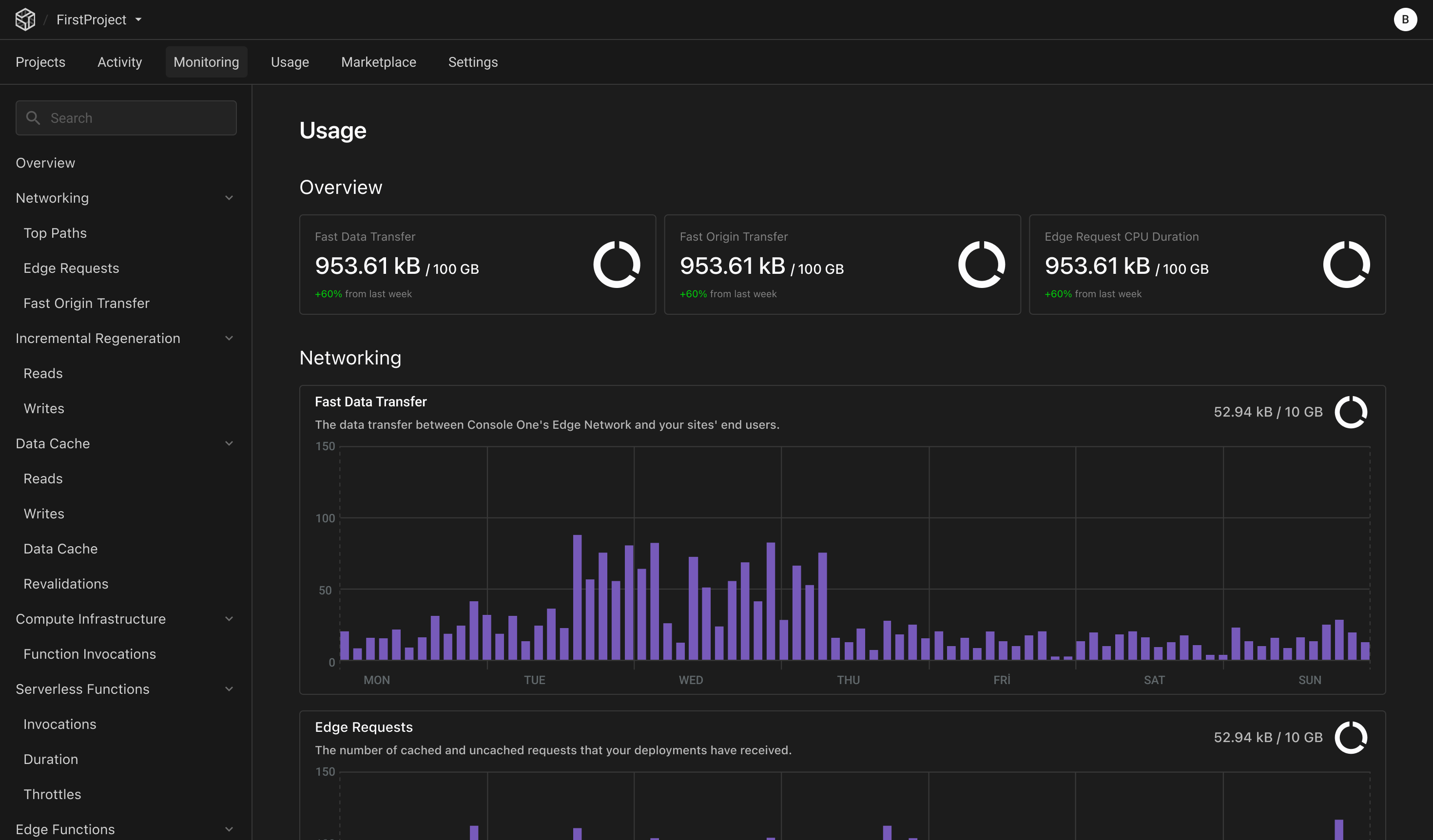
Once something deployed, this screen tracked it: data transfer, edge requests, CPU. Every product published through Console One had an operational view built in.
Three years building, then a clean pivot. The team found the real bottleneck wasn't writing code — it was communication and lost context. That realization became StoryLens.